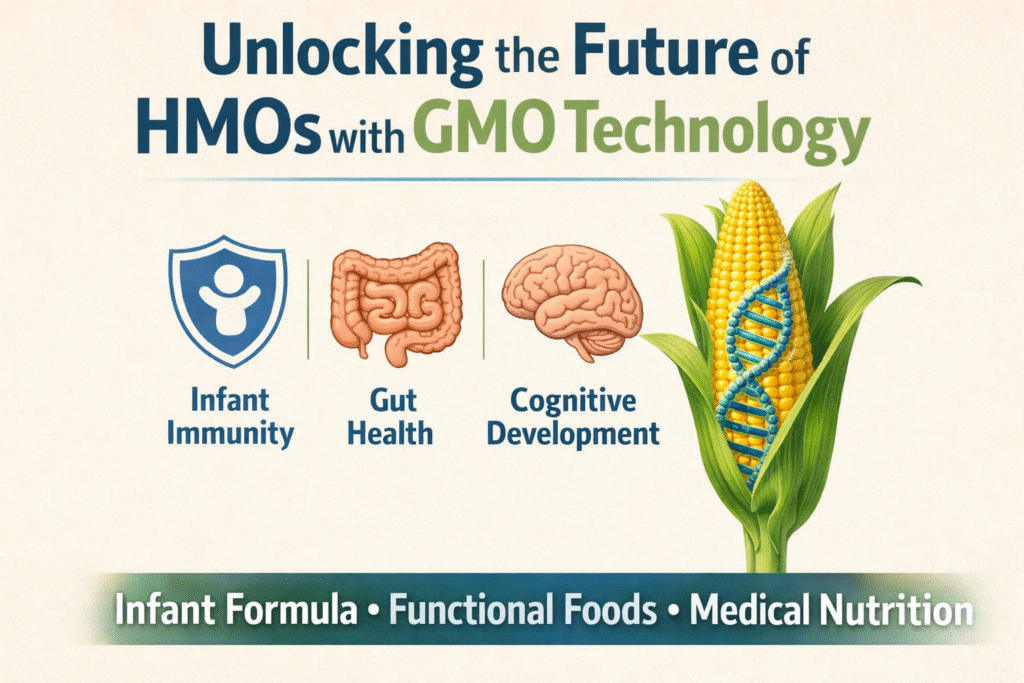
The production of human milk oligosaccharides (HMOs) is vital for infant health, influencing immunity and cognitive development. Recent advancements in genetic engineering propose that genetically modified organism (GMO) plants could facilitate large-scale HMO production, addressing nutritional needs. This article explores the implications of utilizing GMO technology to unlock the full potential of HMOs.
Understanding Human Milk Oligosaccharides
Human milk oligosaccharides (HMOs) are a remarkable class of complex carbohydrates found in human breast milk, playing a crucial role in infant nutrition. Comprising over 200 distinct structures, HMOs represent the third most abundant component in human milk, following lactose and fat. Their complexity and diversity contribute significantly to the health benefits they provide to infants, highlighting the intricate relationship between nutrition and immunity during the critical early stages of life.
One of the primary functions of HMOs is their role in supporting infant immunity. By acting as decoy receptors, HMOs can prevent pathogens from binding to the gut lining, effectively blocking infections. This property is vital for infants, whose immune systems are still maturing. Moreover, HMOs enhance the growth of beneficial gut bacteria, particularly bifidobacteria, which dominate the microbiota of breastfed infants. This prebiotic effect plays an essential role in establishing a healthy gut environment, which is linked to long-term health outcomes.
In addition to bolstering the immune system, HMOs are instrumental in promoting gut health. They can aid in the development of the gut barrier, reduce inflammation, and support overall gastrointestinal function. The fermentation of HMOs by bifidobacteria leads to the production of short-chain fatty acids (SCFAs), which nourish intestinal cells and contribute to a robust gut lining. Consequently, the presence of HMOs in human milk not only fosters a healthy microbiome but also lays the foundation for proper digestion and nutrient absorption.
Cognitive development is another significant area influenced by HMOs. Emerging research suggests that oligosaccharides may play a role in brain development, potentially through their impact on gut health and microbiome composition. A balanced gut microbiome is increasingly recognized as a factor influencing neurodevelopment, with potential links to learning and behavior.
The diversity of HMOs and their multifaceted biological activities underscores their importance as prebiotic agents. Their ability to selectively promote beneficial bacteria while inhibiting pathogens highlights the significance of incorporating HMOs into infant nutrition. As researchers delve deeper into the complex world of HMOs, the potential for harnessing genetic engineering to produce these vital compounds in GMO plants opens exciting avenues for enhancing infant health and nutrition. Through the synergy of genetic innovation and nutritional science, we may be closer to unlocking the full spectrum of HMOs, setting the stage for transformative advancements in infant formula and overall dietary strategies.
The Science Behind Genetic Modification
Genetically modified organisms (GMOs) represent a significant advancement in biological science and agriculture, allowing for the development of crops with enhanced traits. At the heart of genetic engineering lies a suite of techniques that enable scientists to modify an organism’s DNA, introducing or altering specific genes to enhance desirable characteristics. The primary techniques include CRISPR-Cas9, transgenic methods, and gene editing. CRISPR-Cas9, for example, offers a precise mechanism for editing genes by allowing the targeted modification of DNA sequences, thereby facilitating the insertion, deletion, or alteration of specific genes within an organism.
The history of GMOs traces back to the early 1970s, when scientists first discovered ways to manipulate genetic material. A landmark achievement came in 1994 with the introduction of the Flavr Savr tomato, the first commercially grown genetically engineered food. Following this, a wave of GM crops was developed, including Bt cotton and Roundup Ready soybeans, which were engineered for pest resistance and herbicide tolerance, respectively. These innovations not only boosted agricultural productivity but also laid the foundational knowledge for future genetic engineering applications.
The prospect of utilizing GMO plants for the production of human milk oligosaccharides (HMOs) is particularly intriguing. HMOs are complex carbohydrates found predominantly in human breast milk and have essential roles in shaping infant health, immunity, and gut microbiota composition. Traditional methods for HMO extraction from human milk are limited by ethical and logistical challenges, leading scientists to explore plant-based solutions.
By integrating genes responsible for HMO biosynthesis into crops, researchers can create GMO plants capable of synthesizing these beneficial compounds. For instance, genes encoding glycosyltransferases, enzymes critical for HMO formation, can be transferred into plants like rice or corn. Such engineered plants could potentially produce a full spectrum of HMOs, making these vital nutrients more accessible and affordable for broader populations.
The synergy of genetic engineering with nutritional innovation opens avenues for producing HMOs on a scale that meets the growing demand for infant nutrition. Leveraging the capabilities of GMOs not only provides a solution to current limitations in HMO production but also paves the way for novel applications targeting health and nutrition, ultimately reimagining the landscape of infant feeding.
Current Methods for HMO Production
The production of human milk oligosaccharides (HMOs) has grown increasingly important due to their unique health benefits, particularly for infant nutrition. Currently, several methods are utilized to produce these complex carbohydrates, each with its distinct advantages and limitations. The two primary approaches are natural extraction from human milk and synthetic production through enzymatic or chemical processes.
Natural extraction, while the most direct method, faces significant hurdles. Cow’s milk is often used as a source of oligosaccharides, but it does not replicate the full spectrum of HMOs found in human milk. The extraction process is labor-intensive and yields relatively small quantities, making production prohibitively expensive for broader applications. Moreover, the variability in human milk composition among lactating women limits the consistency of extracted products. Therefore, while natural extraction is effective in obtaining specific HMOs, it fails to provide a comprehensive and scalable solution.
On the other hand, synthetic methods that utilize enzymatic processes offer a promising alternative. Enzymatic synthesis can be tailored to produce specific oligosaccharide profiles, facilitating targeted nutritional applications. Nevertheless, these methods often rely on expensive substrates and complex reaction conditions, which further drive up costs. Additionally, the scalability of such techniques remains a challenge since they necessitate sophisticated bioreactor systems and stringent process controls to maintain product consistency and safety.
Chemical synthesis represents another avenue; however, it tends to be fraught with technical difficulties, including low yields and the risk of producing undesired byproducts. Furthermore, the synthetic processes often do not mirror the natural biosynthesis pathways present in humans, which can lead to differences in bioactivity and efficacy.
The limitations of these current production techniques significantly affect the availability and affordability of HMOs for nutritional applications. They restrict access to these vital compounds, particularly in markets that seek to improve infant nutrition through fortified formulas or functional foods. As such, there exists a compelling need to explore alternative methods that could enhance the efficiency and cost-effectiveness of HMO production.
In this context, the application of genetically modified organisms (GMOs), particularly plants engineered to produce HMOs, emerges as an innovative solution. By harnessing the power of genetic engineering, it may be possible to circumvent the limitations of current production techniques, paving the way for a new era in HMO synthesis that ensures both availability and affordability.
The Potential of GMOs in HMO Synthesis
The prospect of utilizing genetically modified organisms (GMOs) to synthesize human milk oligosaccharides (HMOs) on a large scale presents a promising avenue for enhancing nutritional applications, particularly in infant formula and dietary interventions. The genetic engineering of plants to produce HMOs could revolutionize the landscape of oligosaccharide availability, addressing some of the significant limitations that currently hinder production efficiency and cost-effectiveness.
One of the primary advantages of GMO plants for HMO production lies in their ability to convert energy and nutrients into value-added compounds. Through targeted genetic interventions, specific pathways can be activated or enhanced, allowing plants to synthesize complex carbohydrate structures that mimic those found in human milk. For instance, research has demonstrated the feasibility of introducing key genes responsible for HMO biosynthesis into plant genomes. This strategy could facilitate the production of a broad spectrum of HMOs, effectively addressing the diverse needs of infants and vulnerable populations.
In terms of cost, plant-based HMO production could significantly reduce expenses compared to microbial fermentation or chemical synthesis methods. Traditional methods often involve expensive substrates, complicated processing, and lengthy production times. In contrast, plants can leverage sunlight, water, and nutrients absorbed from the soil to yield high quantities of HMOs at a lower price point. For example, studies have shown that transgenic plants can achieve remarkable yields of target oligosaccharides, which could make these compounds more accessible and affordable for families relying on infant formula.
Several case studies highlight the ongoing efforts to deploy GMO plants for HMO synthesis. Research conducted by institutions such as the University of California and various biotechnology companies has reported progress in engineering crops like rice and sugar beets to produce specific HMOs. In these studies, plants have successfully expressed human genes responsible for oligosaccharide synthesis, ultimately producing compounds with similar functional attributes to those in human milk.
Moreover, the scalability of plant production systems allows for large-scale cultivation, further enhancing the potential for commercial applications. As agriculture adapts to incorporate biotechnology, the movement towards optimizing plant-based HMO production could play a pivotal role in improving nutrition, particularly for those who are unable to access breast milk. This synergy between genetic engineering and nutritional innovation could unlock new possibilities, ensuring that HMOs are widely available as a crucial dietary component.
Ethical Considerations and Future Perspectives
As the pursuit for generating human milk oligosaccharides (HMOs) through genetically modified organisms (GMOs) progresses, ethical considerations surface, inviting discourse that balances innovation with societal concerns. Utilizing GMO plants for HMO production involves navigating a complex landscape shaped by public perceptions, regulatory frameworks, and moral dilemmas inherent in biotechnology.
Public perceptions of GMOs remain polarized. Many individuals express apprehension rooted in distrust over genetic manipulation, fearing unforeseen consequences on health and the environment. Educational initiatives could serve to mitigate skepticism, fostering a deeper understanding of how genetic engineering can enhance nutritional profiles, specifically in producing HMOs that are crucial for infant development. Engaging communities through transparent dialogue is paramount. Demonstrating the rigorous safety assessments and ethical guidelines that govern GMO research may help alleviate fears and cultivate acceptance.
Regulatory challenges also play a critical role in the pathway to commercializing GMO-derived HMOs. The stringent frameworks imposed by authorities reflect a necessity to ensure consumer safety and environmental integrity. The evolving nature of legal standards, which can differ significantly across regions, creates hurdles for researchers and manufacturers. A harmonized regulatory approach could streamline the evaluation process, enabling the global exchange of innovations while maintaining safety protocols. Notably, continuous collaboration among scientists, policymakers, and ethicists is vital to charting a course that respects public concerns without hindering technological advancement.
Looking toward the future, the landscape of HMO production may be reshaped by breakthroughs in biotechnology, positioning GMO plants not merely as commercial entities but as means of addressing nutritional deficiencies in vulnerable populations. The potential to tailor HMO profiles in plants could lead to a broad spectrum of health benefits, such as improved gut microbiota and enhanced immune responses. Innovations like CRISPR technology may unlock precise modifications, amplifying the efficacy of HMO synthesis while minimizing unintended effects.
Ultimately, the journey of GMO plants as a cornerstone of HMO production intertwines ethical reflection with scientific progress. As we evolve toward a future where biotechnological solutions meet critical nutritional needs, fostering an environment that prioritizes ethical considerations and public engagement will be essential in unlocking the full potential of this promising endeavor.
Conclusions
The intersection of genetic engineering and nutrition offers promising prospects for enhancing human milk oligosaccharide production through GMO plants. While challenges remain, the potential benefits for infant health and nutrition are substantial. Continued research and ethical considerations will be essential as we move towards realizing this innovative solution.