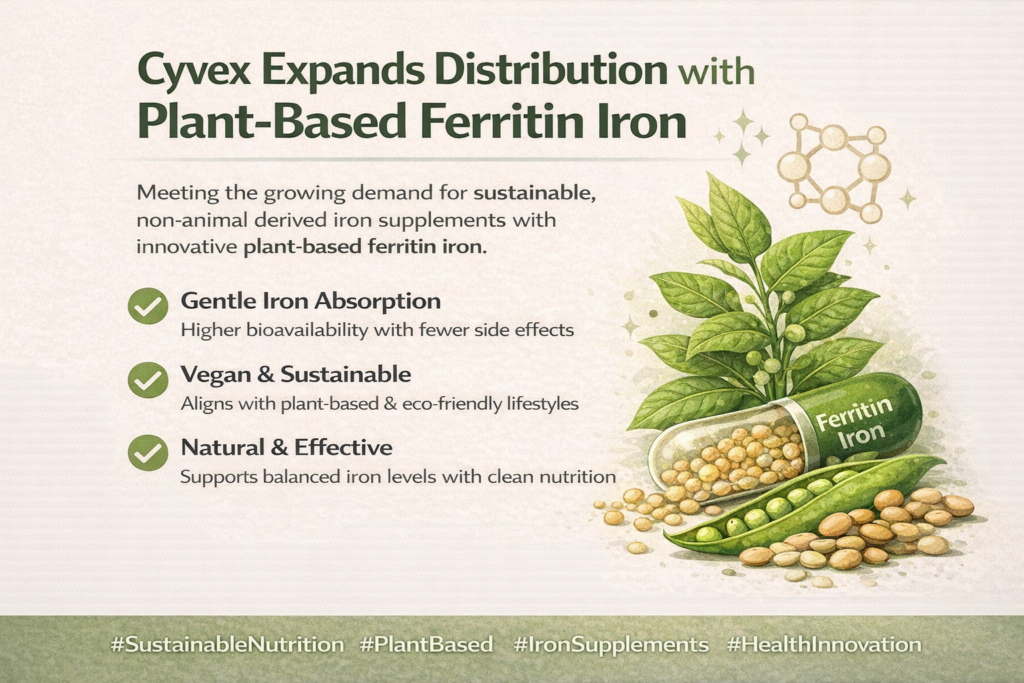
Cyvex has made a significant advancement by adding plant-based ferritin iron to its distribution portfolio, catering to the rising demand for sustainable and non-animal derived iron supplements. This article explores the impact and benefits of plant-based ferritin iron, highlighting its role in health, nutrition, and the environment.
Understanding Ferritin and Its Importance
Ferritin is an essential protein that plays a vital role in iron metabolism within the body. It serves as the main storage form of iron, ensuring availability for biological processes while preventing toxicity that can result from excessive free iron. Structurally, ferritin is a globular protein complex, composed of 24 subunits that assemble to form a hollow sphere. This unique configuration allows ferritin to sequester up to 4,500 iron ions in its core, thus providing a readily accessible reservoir of iron when needed.
The importance of ferritin in regulating iron levels cannot be overstated. Iron is crucial for various physiological functions, including oxygen transport, energy production, and DNA synthesis. The body continuously requires iron for hemoglobin synthesis in red blood cells, enzyme function, and cellular metabolism. Without adequate iron stores, individuals can become susceptible to iron deficiency anemia, which can lead to fatigue, weakness, and impaired cognitive function. Furthermore, ferritin levels serve as a key indicator of overall iron stores in the body; measuring serum ferritin is a common clinical approach to assess iron status.
Interestingly, ferritin is present in both animal and plant sources, though the structure and origin may vary. Animal-derived ferritin, typically obtained from sources like liver and pancreas, has been more widely studied and is often associated with higher bioavailability. In contrast, plant-derived ferritin is increasingly gaining attention for its potential health benefits and as a vegan-friendly alternative. The presence of ferritin in plants grants them the ability to store iron in a form that is biologically relevant, enabling organisms that consume plant-based diets to access essential nutrients.
The diverse types of ferritin found across species—known as apoferritin when devoid of iron—highlight the adaptability of this protein to different physiological environments. Plant ferritin, although initially considered less effective than its animal counterpart, has shown promise in modulating iron levels when ingested. Recent advancements in research illustrate that the bioactivity of plant-based ferritin can be enhanced through technological innovations in supplement formulation, paving the way for its use in dietary supplements as a sustainable and effective iron source. This burgeoning understanding aligns with Cyvex’s introduction of plant-based ferritin iron, reinforcing its commitment to delivering innovative and health-oriented supplementation solutions.
The Benefits of Plant-Based Iron Supplements
The introduction of plant-based ferritin iron into Cyvex’s distribution portfolio signifies a transformative shift in how we understand and utilize iron supplementation. Unlike traditional iron sources, which often rely on heme iron from animal products or inorganic ferrous forms, plant-based ferritin offers a host of advantages that are especially appealing to today’s health-conscious consumers.
**One of the primary benefits of plant-based ferritin iron is its superior absorption rate.** Research indicates that the bioavailability of iron from plant sources can be markedly improved when iron is delivered in the form of ferritin. A study published in the *Journal of Nutrition* demonstrated that ferritin iron significantly increased serum ferritin levels in the body, and was better absorbed than elemental iron. This enhanced absorption is essential, particularly for individuals who have heightened requirements for iron, such as pregnant women, athletes, and those with certain dietary restrictions.
Furthermore, plant-based iron supplements often come with a reduced risk of side effects compared to their traditional counterparts. Iron supplementation has frequently been associated with gastrointestinal discomfort, constipation, nausea, and other digestive concerns, especially with ferrous sulfate. However, clinical trials suggest that plant-based ferritin iron is better tolerated and induces fewer adverse gastrointestinal effects. This is an attractive quality for consumers who may be apprehensive about incorporating iron supplements into their routine due to fear of unpleasant side effects.
**Additionally, the alignment of plant-based ferritin with vegan and vegetarian diets cannot be overstated.** As more individuals transition towards plant-based lifestyles, the need for reliable sources of iron becomes crucial. While non-heme iron from plant foods is well-known, its absorption can be limited by various dietary components. Plant-based ferritin iron offers a clean, effective alternative that fits seamlessly into these diets, allowing individuals to maintain optimal health without compromising their dietary choices.
Supporting these claims, various studies have shown that plant-based iron sources can effectively maintain healthy iron levels. For instance, a meta-analysis found that individuals supplementing with plant-derived ferritin reported improved hematologic outcomes without the adverse effects often seen with traditional iron supplements. This evidence reinforces the growing consensus that plant-based iron can be a viable solution for those seeking to optimize their nutritional intake responsibly and sustainably. In conclusion, the addition of plant-based ferritin iron not only enhances Cyvex’s offerings but also addresses the evolving needs of consumers in a conscious and health-focused marketplace.
Cyvex and Its Commitment to Sustainable Nutrition
Cyvex is driven by a vision of sustainable health and nutrition that transcends mere product offerings; it embodies a commitment to creating solutions that are beneficial for both individuals and the planet. The company recognizes that in an ever-evolving marketplace, particularly with the surge in dietary awareness, consumers are increasingly seeking nutritional products that reflect their values, and this includes a strong preference for sustainability and health-focused ingredients. By incorporating plant-based ferritin iron into their distribution portfolio, Cyvex strengthens its dedication to providing innovative nutritional solutions that meet the emerging needs of health-conscious consumers.
Historically, Cyvex has made its mark with a diverse array of premium nutritional ingredients. Their portfolio includes marine-derived omega-3 fatty acids, botanical extracts, and probiotic strains, each curated to promote well-being through natural methods. The introduction of plant-based ferritin iron complements this existing lineup by offering a clean, efficient, and bioavailable iron source that resonates with a growing demographic focused on holistic health. This aligns perfectly with Cyvex’s emphasis on sourcing ingredients that uphold ethical standards while also catering to vegan and vegetarian needs.
The synergy between existing products and the new plant-based ferritin iron highlights Cyvex’s strategy to remain at the forefront of the nutritional supplement industry. As consumers increasingly turn toward diet diversity and nurturing through natural sources, the addition of plant-based ferritin iron not only enhances the company’s offerings but directly addresses the concerns many have regarding the side effects and absorption challenges associated with traditional iron supplements. This innovative iron option provides a solution that fits seamlessly within Cyvex’s commitment to promoting sustainable and healthy living.
Cyvex understands that the landscape of dietary supplementation is shifting, driven by informed consumers who prioritize transparency and sustainability in their purchasing decisions. By evolving its product portfolio to include plant-based alternatives, Cyvex not only commits to meeting consumer demands but also takes a strong stand in fostering a more sustainable future for health and nutrition. This strategic move reinforces the company’s role as a leading player in the nutrition market, showcasing its commitment to innovation that is both health-driven and environmentally conscious.
Market Trends and Consumer Demand for Plant-Based Solutions
The demand for plant-based supplements has seen significant growth in recent years, reflecting broader consumer trends toward more sustainable and health-conscious choices. A survey released by the Plant-Based Foods Association reported that over 50% of U.S. households now consume plant-based foods, illustrating a substantial shift in dietary preferences. This trend is particularly prominent among younger consumers, with data indicating that 70% of millennials actively seek plant-based options, driven by health, ethical considerations, and environmental concerns.
As consumers become increasingly aware of nutritional needs and the implications of their dietary choices, the desire for effective and natural iron sources has grown. Traditional iron supplements often come with side effects like gastrointestinal discomfort, which discourage consistent use among certain populations. In contrast, plant-based ferritin offers a gentler alternative, appealing especially to those facing sensitivity issues. Studies show that consumers are willing to pay a premium for supplements that feature plant-derived ingredients, reinforcing Cyvex’s strategic decision to diversify its portfolio with plant-based ferritin iron.
Another pivotal factor in this trend is the rise of wellness culture, which emphasizes holistic health and preventive care. According to the International Health, Racquet & Sportsclub Association, approximately 73% of adults engage in regular health and wellness practices, including dietary supplementation. Individuals are looking for products that not only address deficiencies but also align with their overarching lifestyle choices. Nutraceuticals composed of natural ingredients are perceived as safer and more effective, pushing companies like Cyvex to adapt their offerings to meet these evolving consumer preferences.
Moreover, the convergence of environmental consciousness with health awareness is further driving the plant-based market. A survey by Ipsos showed that 63% of consumers believe that sustainable sourcing is essential when selecting their dietary supplements. This statistic highlights the urgency for manufacturers to articulate their commitment to sustainability, which Cyvex has embraced wholeheartedly with its plant-based ferritin iron.
In summary, the surging demand for plant-based supplements is reshaping the landscape of nutritional offerings. This shift presents significant opportunities for companies like Cyvex to capture an engaged and health-focused consumer base, thereby influencing the broader market dynamics for iron supplementation and positioning themselves as leaders in innovative, sustainable nutrition solutions.
Looking Ahead: The Future of Iron Supplementation
As Cyvex introduces plant-based ferritin iron to its distribution portfolio, the implications for the future of iron supplementation are substantial. This innovative addition is more than just a supplement; it represents a pivotal shift in how we approach nutritional health and supplementation. The combination of consumer preference for plant-derived products and the increasing awareness of iron’s vital role in maintaining overall wellness is likely to propel the industry in new directions.
Looking forward, advances in iron supplementation could see an emergence of more diverse and innovative sources. Research may uncover new plant-based sources rich in ferritin iron, expanding the options available for consumers who seek alternatives to traditional iron supplements. With biotechnology evolving rapidly, there could be significant breakthroughs in bioavailability, allowing for improved absorption rates of iron from plant sources, thus enhancing the efficacy of supplementation.
Innovation will play a critical role in guiding nutrition forward—both in terms of product development and educational efforts. As the demand for transparency in ingredient sourcing grows, companies like Cyvex may need to focus on establishing robust quality control measures and comprehensive labeling practices to assure consumers of the safety and effectiveness of plant-based offerings. This may encourage other organizations to prioritize innovation that meets sustainability goals while addressing nutritional deficiencies.
Consider the broader impacts on health practices that might arise from these developments. As awareness increases regarding the importance of gut health in nutrient absorption, future formulations could integrate probiotics or complementary nutrients that promote a synergistic effect with ferritin iron. Such advancements could further empower individuals to take charge of their health through informed dietary choices.
Moreover, the environmental sustainability angle must not be overlooked. The production and sourcing of plant-based ferritin iron, along with the potential reduction of animal-derived supplements, may significantly lower the ecological footprint of the supplement industry. Consumers increasingly seek products that align with both personal health goals and broader environmental values, thus fostering a more holistic approach to health and wellness.
Ultimately, the introduction of plant-based ferritin iron by Cyvex is not simply a response to growing market trends; it signals a proactive stance in reshaping nutritional strategies for a healthier, more sustainable future. As innovation continues to unfold, we may witness a significant transformation within the realm of iron supplementation, leading to improved health outcomes and greater environmental consciousness.
Conclusions
In conclusion, Cyvex’s incorporation of plant-based ferritin iron not only enhances their product offerings but also aligns with the growing consumer preference for plant-derived nutrients. This innovative move signifies a shift towards more sustainable health solutions, benefiting both individuals and the planet.
Direct Scientific Citations on Plant-Based Ferritin Iron
1. Human Absorption of Ferritin Iron
Ferritin iron is absorbed in humans and can serve as a bioavailable iron source.
-
Murray-Kolb, L. E., et al. (2014)
Iron absorption from ferritin is efficient in women with low iron stores.
American Journal of Clinical Nutrition, 100(4), 1154–1161.
https://academic.oup.com/ajcn/article/100/4/1154/4576515
2. Intestinal Uptake Mechanism (Endocytosis)
Ferritin iron is absorbed via a distinct pathway compared to non-heme iron.
-
San Martín, C. D., et al. (2008)
Ferritin iron absorption is regulated by iron status in Caco-2 cells.
Journal of Nutrition, 138(4), 659–666.
https://academic.oup.com/jn/article/138/4/659/4670028
3. Plant Ferritin as a Dietary Iron Source
Plant ferritin (e.g., soybean ferritin) functions as a nutritionally relevant iron source.
-
Lonnerdal, B. (2009)
Soybean ferritin: implications for iron status of vegetarians.
American Journal of Clinical Nutrition, 89(5), 1680S–1685S.
https://academic.oup.com/ajcn/article/89/5/1680S/4596943
4. Structural & Functional Properties of Ferritin
Ferritin’s protein nanocage enables safe iron storage and delivery.
-
Theil, E. C. (2015)
Ferritin protein nanocages—The story.
Journal of Biological Inorganic Chemistry, 20(2), 343–355.
https://doi.org/10.1007/s00775-014-1216-0
5. Plant Ferritin & Iron Homeostasis
Plant ferritin plays a direct role in iron storage and controlled release.
-
Briat, J.-F., et al. (2010)
Plant ferritin and iron homeostasis.
Biochimica et Biophysica Acta, 1800(8), 806–814.
https://doi.org/10.1016/j.bbagen.2010.01.002