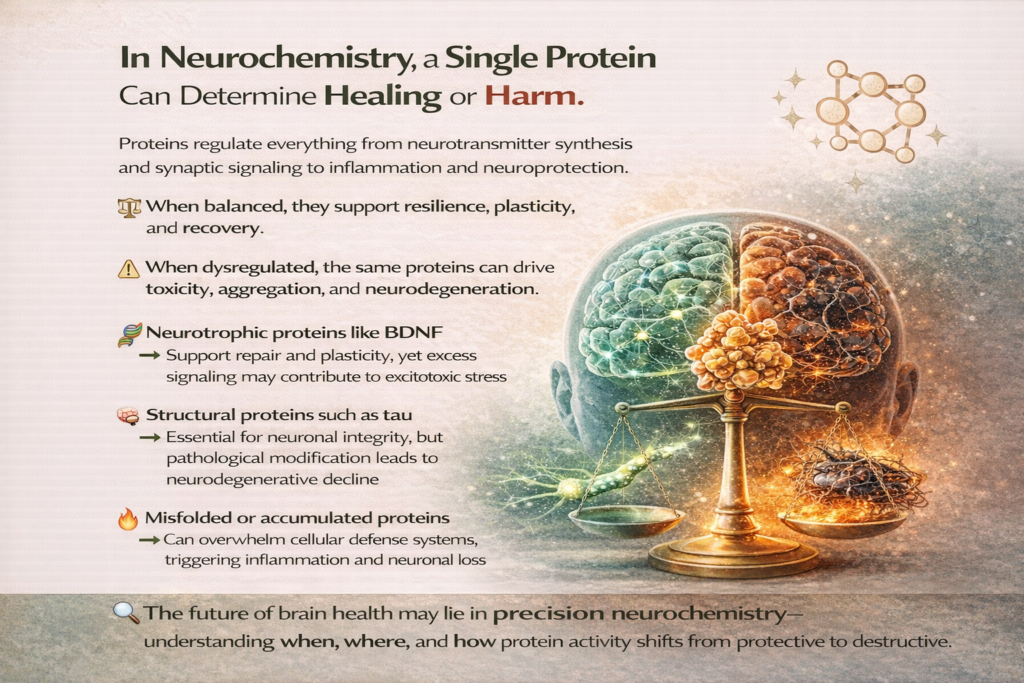
In the intricate world of neurochemistry, one protein can significantly influence whether brain chemistry promotes healing or exacerbates harm. Understanding the mechanisms of this protein reveals vital insights into neurological health, potential therapies, and the complex interplay between proteins and brain function.
Understanding Neurochemistry
Neurochemistry is a field that examines the chemical processes and substances that influence brain function. At its core, neurochemistry involves a complex interplay of neurotransmitters, neuropeptides, enzymes, and additional molecules that facilitate communication between neurons. Understanding neurochemistry is crucial, as it lays the foundation for insights into how various proteins can affect brain chemistry, potentially leading to healing or harm.
Neurotransmitters, such as dopamine, serotonin, and acetylcholine, are chemical messengers responsible for transmitting signals across synapses, the junctions between neurons. These substances regulate numerous functions, including mood, cognition, motor control, and the perception of pain. Neurotransmitters are derived from amino acids and are synthesized through various biochemical pathways, each requiring a specific set of proteins for their conversion. Neuropeptides, on the other hand, are larger molecules that modulate neurotransmitter activity and can influence the overall sensitivity of neural receptors.
The historical context of neurochemistry dates back to the early 20th century when scientists began to uncover the chemical nature of neurotransmission. This study has since evolved into a sophisticated understanding of how neurotransmitters interact within neural networks, affecting complex behaviors and emotional states. For instance, the delicate balance of neurotransmitter levels is crucial for maintaining homeostasis within the brain. A disruption in these levels can lead to both acute symptoms, such as anxiety or depression, and chronic conditions, including neurodegenerative diseases.
At the synaptic level, chemical interactions are mediated by a variety of proteins, including receptors, transporters, and enzymes, all playing critical roles in modulating neuronal activity. Receptors, found on the post-synaptic neuron, bind to specific neurotransmitters, facilitating the transmission of the signal. Transporters are responsible for the reuptake of neurotransmitters, recycling them for future use, while enzymes break down excess neurotransmitters to prevent toxicity.
Overall, neurochemistry serves as the backbone for understanding brain function and the intricate balance required for optimal mental health. The effects of proteins on neurotransmitter dynamics ensure that the brain remains resilient, adaptable, and capable of healing when challenged. This underpins the premise that a single protein can be pivotal in determining the pathways of repair or degeneration within the complex circuitry of the brain.
The Role of Proteins in Brain Health
Proteins play an integral role in maintaining brain health, significantly influencing neurotransmitter synthesis, function, and overall neural signaling. They serve as the building blocks of neurotransmitters, which are fundamental chemical messengers facilitating communication between neurons. The manufacturing and regulation of these neurotransmitters hinge on the proper functioning of specific proteins, which can either promote healthy brain activity or predispose the brain to dysfunction.
A primary example of such proteins includes *tryptophan hydroxylase*, which is crucial for serotonin synthesis. This protein catalyzes the conversion of tryptophan into serotonin, a neurotransmitter associated with mood regulation, cognition, and emotional well-being. Dysregulation of serotonin levels, often linked to mood disorders, illustrates how a single protein can pivotally affect emotional and cognitive functions. Similarly, *tyrosine hydroxylase* is another vital protein, responsible for synthesizing dopamine, a key neurotransmitter implicated in motor control and reward pathways. Abnormalities in dopamine levels can lead to conditions such as schizophrenia and Parkinson’s disease, showcasing the dual nature of proteins in brain health.
In addition to neurotransmitter synthesis, proteins also play roles in the proper functioning of receptors. For instance, the *NMDA receptor*, essential for synaptic plasticity and memory formation, relies on a variety of proteins for its signaling capabilities. These proteins facilitate the binding of neurotransmitters, enabling the opening of ion channels that allow for calcium influx essential for long-lasting synaptic changes. The interplay between proteins and receptor function highlights the necessity of maintaining protein integrity and balance within brain chemistry.
Moreover, proteins like *SIRT1* play a protective role in neuronal environments by participating in stress response and inflammation regulation. This protein is involved in neuroprotection and has been studied for its potential in improving cognitive functions and resilience against neurodegenerative processes. The complexity of protein interactions in the brain reinforces the idea that even single proteins can have multifaceted influences on cognitive health.
As we explore further the repercussions of protein dysregulation, it becomes evident that while proteins are vital for sustaining neural integrity, their imbalance can precipitate significant repercussions for brain health. The dynamic balance of proteins is crucial, indicating that one protein may ultimately determine whether brain chemistry leads to healing or harm.
When Proteins Go Awry: Toxicity and Neurodegeneration
The intricate balance of protein function in the brain becomes apparent when we consider the detrimental effects of protein accumulation. In the context of neurodegenerative diseases, certain proteins can turn from essential building blocks into toxic agents, significantly disrupting brain function. This conversion often occurs due to misfolding, aggregation, and subsequent accumulation of proteins that can lead to cellular toxicity.
For instance, in Alzheimer’s disease, amyloid-beta proteins aggregate to form plaques that interfere with cell signaling and trigger inflammatory responses. This plaque formation leads to cellular dysfunction and death, progressively impairing cognitive abilities. Similarly, in Parkinson’s disease, the protein alpha-synuclein misfolds and accumulates in the form of Lewy bodies within neurons, contributing to neuronal death and motor function disorders. This shift from functional to dysfunctional forms illustrates how one type of protein can dictate both the health and pathology of the brain.
The mechanisms underlying protein toxicity often involve several overlapping pathways. Misfolded proteins can impair proteostasis—the cellular process that regulates protein folding and degradation. When proteostasis is compromised, the capacity to clear harmful protein aggregates diminishes, leading to cellular stress and mitochondrial dysfunction. The resulting inflammation can create a toxic environment that exacerbates neurodegenerative processes.
Further compounding these issues is the role of excitotoxicity, wherein excess neurotransmitters, often prompted by toxic protein interactions, overstimulate receptors, resulting in neuronal injury and death. Elevated levels of glutamate, a key neurotransmitter affected by such processes, can lead to calcium overload in neurons, further prompting cell death pathways.
Moreover, protein accumulation can activate neuroinflammatory responses, recruiting immune cells that release pro-inflammatory cytokines, which may accelerate neurodegeneration. This cycle of damage emphasizes how a single protein’s abnormal behavior can pivotally influence brain health, transitioning from the sustenance of neural functions to a harbinger of neurodegenerative diseases.
Mitigating these protein-induced toxins remains a critical focus in therapeutic strategies aimed at halting or reversing the progression of neurodegenerative conditions. Understanding the delicate balance of protein functions sheds light on both the potential for healing and the lurking dangers within the brain’s biochemical landscape.
Key Proteins in Healing Versus Harmful Processes
The brain’s intricate chemistry is a delicate balance between healing and harm, with specific proteins that embody this duality. One such protein is brain-derived neurotrophic factor (BDNF), a crucial player in neuroplasticity and synaptic function. In healthy conditions, BDNF promotes neuronal survival, growth, and differentiation, significantly aiding recovery from brain injuries. Its expression increases following neuronal injury, facilitating the regeneration of neuronal pathways and the formation of new synapses. However, in pathological states, elevated levels of BDNF have been associated with neurodegenerative processes, suggesting that this protein’s protective role can quickly transform into a harmful one. The excess release of BDNF in these contexts can lead to excitotoxicity, contributing to neuronal death and exacerbating conditions like Alzheimer’s disease.
Another protein of interest is tau, primarily known for its role in the stabilization of microtubules in neurons. Under normal circumstances, tau supports neuronal integrity and function. However, abnormally phosphorylated tau is a hallmark of neurodegenerative diseases, particularly in Alzheimer’s. Phosphorylated tau aggregates into neurofibrillary tangles that interfere with neuronal signaling and transport systems, ushering in a cascade of neurodegenerative decline. This highlights tau’s dual role: while it is essential for maintaining neuronal health, its dysfunction can precipitate significant harm.
Additionally, the involvement of glial cell-derived proteins, such as glial fibrillary acidic protein (GFAP), further illustrates the complexity of brain chemistry. GFAP is an indicator of astrogliosis, which can be beneficial in the short term by providing structural support and promoting healing. However, chronic upregulation signals prolonged inflammation, which damages surrounding neurons and impedes recovery in neurodegenerative diseases.
The balance between these proteins is vital for optimal brain health. The shift from protective to detrimental roles exemplifies a broader theme in neurochemistry: that the same element can yield drastically different outcomes depending on contextual factors, such as concentration, location, and timing. Understanding these relationships is essential, as it allows for targeted therapeutic strategies that harness the protective capabilities of these proteins while mitigating their harmful effects, aiming for a future where we can shift the balance toward healing rather than harm.
Future Directions in Neurochemical Research
The future of neurochemical research is poised at a critical juncture, with emerging studies exploring the dual roles of proteins in brain function and their implications in neurodegenerative diseases. As researchers delve deeper into the molecular mechanisms that define protein interactions within the brain, the potential for innovative therapeutic approaches grows increasingly promising.
Current studies are focusing on identifying specific proteins involved in neurotransmitter regulation and their influence on neural health. For example, neurotrophic factors like Brain-Derived Neurotrophic Factor (BDNF) are being examined for their capacity to support neuronal survival and promote synaptic plasticity. However, the effectiveness of these proteins varies significantly across individuals and conditions. Understanding the context-dependent nature of protein function could pave the way for tailored interventions.
Another exciting avenue of investigation involves the exploration of modulating protein interactions to either enhance or inhibit neurotoxic processes. In particular, proteins that have been identified as biomarkers for neurodegenerative diseases, such as amyloid precursor protein (APP) and tau, warrant further exploration. Ongoing clinical studies are assessing small molecules that can inhibit the aggregation of these proteins, potentially slowing or preventing the onset of diseases like Alzheimer’s.
Across the spectrum of neurochemical research, the importance of the gut-brain axis is gaining attention. Proteins secreted by gut microbiota are now being studied for their role in influencing central nervous system functions. The interplay between these microbiota-derived proteins and neuronal health could unlock new strategies for managing mental health disorders and neurodegeneration.
Moreover, gene therapy approaches are emerging as a revolutionary method for targeting specific proteins directly. By delivering genetic material that encodes for protective proteins, researchers aim to enhance the brain’s natural resilience against degeneration. This strategy could lead to breakthroughs in treating conditions previously deemed untreatable.
As our understanding of these complex protein networks deepens, the ramifications for mental health and neurodegenerative disease treatment are significant. Identifying precise protein interactions provides a foundational platform for developing effective therapies. The journey into this realm of neurochemistry is not just about healing brain chemistry; it’s about redefining the future of how we approach and manage brain health. Balancing the healing and harmful potentials of proteins offers a beacon of hope for innovations in treatment modalities and preventive strategies in the coming years.
Conclusions
In conclusion, the role of proteins in brain chemistry is paramount, influencing both healing and harmful processes. By understanding this dual nature, research can pave the way for therapeutic advances and improved management of neurodegenerative diseases, ultimately enhancing brain health and function.