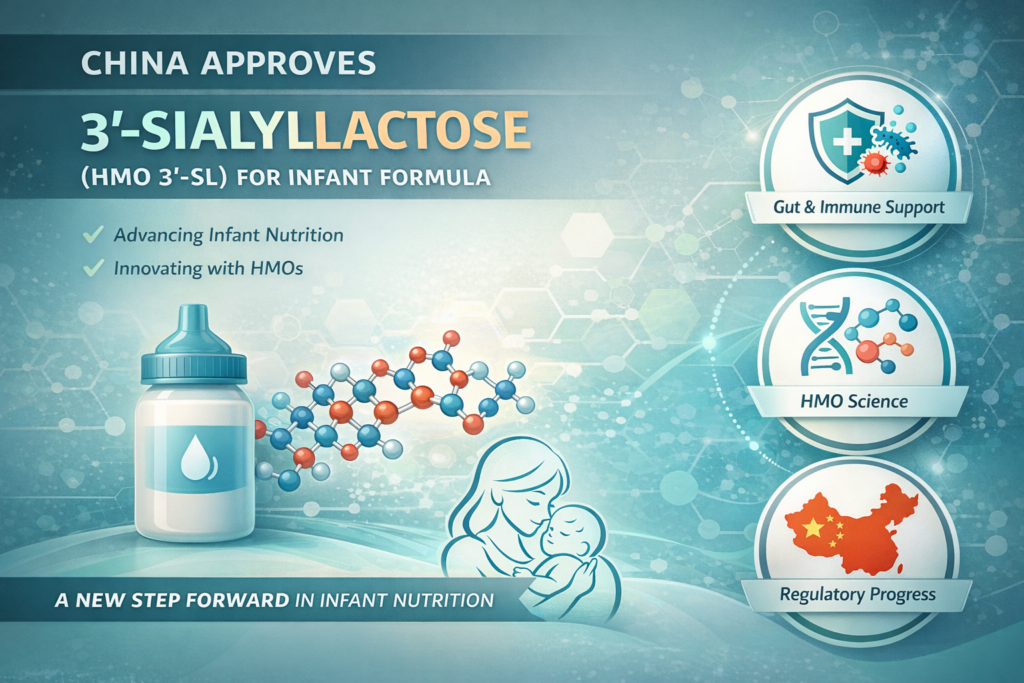
In a groundbreaking move, China has approved 3′-sialyllactose (HMO 3′-SL), a vital human milk oligosaccharide, for use in infant formula. This decision underscores the increasing recognition of HMOs’ vital role in infant nutrition. This article delves into the significance of this approval, the benefits of HMOs, and the implications for infant health and development.
Understanding Human Milk Oligosaccharides
Human Milk Oligosaccharides (HMOs) are complex carbohydrates found in high concentrations in human breast milk, with an estimated 100 different types identified to date. Structurally, HMOs consist of a core of lactose, which can be altered with various sugar molecules, including fucose, sialic acid, and glucose, creating diverse oligosaccharides. The unique composition and structure of HMOs play a vital role in infant health and development. Unlike other mammals, human milk has significantly higher concentrations of HMOs, emphasizing their importance in human nutrition.
Among the critical functions of HMOs is their influence on the gut microbiota. HMOs serve as prebiotics, selectively nourishing beneficial bacteria such as bifidobacteria. This preferential support helps establish a healthy gut microbiome, crucial for digestion and the overall immune response. A balanced gut flora contributes to the production of short-chain fatty acids, which are known to enhance gut barrier function and provide energy for intestinal cells. This symbiotic relationship bolsters the infant’s immunity by not only inhibiting the growth of pathogens but also promoting the maturation of the immune system.
The immune-modulating effects of HMOs are profound. They act as decoy receptors, preventing harmful pathogens from adhering to the intestinal lining and thereby reducing the risk of infections. Studies have shown that infants who receive significant amounts of HMOs through breastfeeding are less likely to experience gastrointestinal and respiratory infections, likely due to the enhanced protection offered against harmful microbes. The immunological benefits derived from HMOs are especially vital in the early stages of life, when the infant’s immune system is still developing.
In addition to their impact on gut health and immunity, HMOs also influence cognitive development. Research indicates that the sialic acid present in certain HMOs is essential for brain development, playing a role in neuronal growth and synaptic plasticity. The presence of these complex carbohydrates in breast milk has been linked to enhanced cognitive abilities and improved developmental outcomes in children.
In summary, HMOs are integral to infant nutrition, promoting a healthy gut microbiota, strengthening the immune system, and supporting cognitive development. Their unique structure and functions underscore the critical role of breastfeeding in early life, setting a strong foundation for lifelong health.
HMO 3′-SL: The Benefits for Infants
HMO 3′-SL (3′-sialyllactose) is receiving growing attention in infant nutrition, particularly as part of advancements in infant formula composition. As a sialylated human milk oligosaccharide, 3′-SL structurally resembles components naturally present in breast milk and is considered biologically relevant to early-life nutrition.
One of the recognized properties of HMOs, including 3′-SL, is their role as selective substrates for beneficial gut bacteria, especially certain Bifidobacterium species. Preclinical studies and research involving multi-HMO formulations suggest that sialylated HMOs may contribute to shaping a gut microbiota profile closer to that observed in breastfed infants. However, it is important to note that much of the clinical evidence available to date evaluates blends of multiple HMOs, rather than 3′-SL as a single isolated ingredient. Therefore, while 3′-SL is structurally positioned to support microbial balance, its independent effect on bifidobacterial growth in humans requires further dedicated study.
Sialylated HMOs such as 3′-SL are also of scientific interest because their structure may act as decoy receptors, potentially interfering with pathogen adhesion in the gut. Experimental and mechanistic studies indicate that this may help reduce microbial binding to intestinal cells. Nonetheless, current human clinical data primarily involve multi-HMO formulations, making it difficult to attribute reductions in infection risk specifically to 3′-SL alone.
Similarly, immune-modulating effects observed in infants consuming HMO-enriched formulas are generally associated with combinations of HMOs. While these findings are encouraging and suggest a role for HMO supplementation in supporting immune development, direct evidence demonstrating that 3′-SL alone reduces the frequency or duration of gastrointestinal or respiratory infections remains limited.
In summary, the inclusion of 3′-SL in infant formula represents an effort to more closely reflect the structural diversity of human milk. Emerging research supports the biological plausibility of its role in gut and immune development. However, current clinical evidence more strongly supports the benefits of multi-HMO systems, and further research is needed to clarify the specific contribution of 3′-SL as an individual component.
China’s recent approval of 3′-SL for use in infant formula reflects a safety-based regulatory advancement and growing scientific interest in HMOs. As research evolves, a clearer understanding of the individual and synergistic roles of specific HMOs will further define their place in infant nutrition.
China’s Regulatory Landscape for Infant Formula
China’s regulatory landscape for infant formula has garnered significant attention in light of the recent approval of HMO 3′-SL (3′-sialyllactose). This momentous decision marks a stride towards enhancing the nutritional profile of baby food in the country, where the safety and quality of infant nutrition are prioritized. China’s stringent regulations surrounding infant food encapsulate a commitment to safeguarding the health of the most vulnerable demographic—infants.
Under the purview of the National Health Commission (NHC), China’s regulations regarding infant formula are rigorous. These standards are designed not only to enforce food safety but also to ensure that nutritional adequacy aligns with the developmental needs of infants. The NHC set forth comprehensive guidelines covering the manufacturing, labeling, and marketing of infant formula. This multifaceted regulatory framework requires that all ingredients are subject to scrutiny, including novel components such as HMOs, ensuring that their inclusion does not compromise safety while enhancing nutritional benefits.
The approval of HMO 3′-SL represents a significant alignment with global practices in infant nutrition, reflecting an increased acceptance of HMOs as a crucial element in formula design. Around the world, the incorporation of HMOs is recognized for its positive impact on infant health, with studies demonstrating its efficacy in supporting immune development and gut health. China’s proactive stance in embracing such innovations signifies a broader understanding of the importance of evidence-based practices in infant nutrition, ensuring that local products meet internationally recognized standards.
Moreover, the implementation of these regulations plays a vital role in restoring consumer confidence, particularly after past quality scandals in the infant formula sector. The rigorous enforcement measures serve as a safeguard against substandard products entering the market, thus reinforcing the importance of quality and integrity in producing infant foods. By ensuring compliance with high safety measures, the NHC supports the growing demand for scientifically-backed formula options among Chinese families.
As China continues to evolve its regulatory framework, the approval of HMO 3′-SL stands out as a pivotal moment in enhancing the nutritional landscape for infants. This milestone reflects a broader trend in recognizing the significance of incorporating advanced nutritional elements into baby formulas, offering both health benefits and reassurance to parents navigating the complexities of infant nutrition.
Implications of HMO 3′-SL Approval for Brands and Parents
The approval of HMO 3’-SL for use in infant formula represents a significant turning point for brands and parents in China and worldwide. As this unique human milk oligosaccharide (HMO) gains recognition, companies that manufacture infant formula are likely to reevaluate and enhance their product formulations to include this beneficial ingredient. This approval could prompt a wave of innovation across the industry, as manufacturers strive to optimize their products with HMO 3’-SL, emphasizing its potential to better mimic the nutritional profile of breast milk.
For infant formula brands, the implications extend beyond product development. Marketing strategies will need to adapt to highlight the presence of HMO 3’-SL, using it as a key selling point that appeals to discerning parents looking for the best nutritional options for their children. These brands may invest in educational marketing campaigns aimed at conveying the unique benefits of HMOs, specifically how they support immune health, promote gut health, and contribute to cognitive development in infants.
Parents, too, will play a crucial role in this evolving landscape. With the emergence of HMO 3’-SL, informed choices in infant nutrition will become increasingly important. Understanding the role of HMOs in infant health will empower parents to make educated decisions about the formulas they choose. Brands that take the initiative to educate consumers on the benefits and science behind HMOs are likely to gain a competitive edge.
Furthermore, as awareness about HMOs like 3’-SL grows, consumer expectations will evolve. Parents will begin to demand more transparency in ingredient sourcing and formulation processes, leading to a broader push for high-quality, science-backed products in the market. This growing emphasis on quality and nutrition may prompt the industry to establish even stricter standards, mirroring the rigorous regulatory landscape already in place in China.
Educating parents about the significance of HMOs in infant nutrition is paramount. It is not just about marketing a product; it is about fostering an understanding of infant health in a broader context. Workshops, informative content, and partnerships with healthcare professionals can enhance this knowledge base, ensuring that caregivers are well-equipped to navigate the complexities of infant nutrition in this new era. As HMO 3’-SL paves the way for innovation, informed choices will shape the future of infant formula consumption worldwide.
Looking Ahead: The Future of Infant Nutrition
The approval of 3’-sialyllactose (3’-SL) by China for inclusion in infant formula marks a pivotal moment in the narrative of infant nutrition, setting the stage for exciting developments in the field. As research continues to unveil the myriad benefits of human milk oligosaccharides (HMOs), it is critical to consider how these advancements will shape the future of infant feeding, paving the way for healthier generations.
The incorporation of 3’-SL is just the tip of the iceberg, as scientists and nutritionists are now poised to explore a broader spectrum of HMOs. Current studies indicate that various HMOs may possess different prebiotic properties, immune-boosting effects, and cognitive development advantages. The potential for future research into other HMOs, such as 2’-fucosyllactose (2’-FL) or lacto-n-neotetraose (LNnT), is vast. As new findings emerge, infant formula formulations will increasingly reflect an understanding of these compounds, fostering an environment where bespoke solutions can be crafted for diverse infant needs.
Innovative infant formulas that prioritize HMO content will likely garner significant attention from manufacturers eager to differentiate their products in a competitive market. As consumer preferences shift toward transparency and science-backed ingredients, brands that invest in research and development of HMO-rich formulas could lead the frontier of nutritional excellence. Furthermore, regulatory agencies may continue to evolve their stances on HMO inclusion, accommodating the development of products that leverage the full potential of the human milk microbiome.
The anticipated benefits of these advancements extend beyond immediate infant nutrition; they reach into the long-term health of future generations. Enhanced cognitive function, improved immunity, and better gut health are just a few of the promising outcomes linked to optimal HMO consumption. As understanding solidifies around the role of HMOs in promoting health, we may see a significant reduction in infant morbidity and lifelong health challenges, hence improving overall public health outcomes.
In conclusion, the approval of 3’-SL is a landmark moment reshaping infant nutrition. As research unfolds and innovative formulations emerge, the future is bright for HMOs in infant formula, offering tantalizing prospects for healthier, more resilient infants. The proactive engagement of brands, parents, and researchers will ultimately define the trajectory of infant nutrition in the years to come.
Conclusions
The approval of HMO 3′-SL for infant formula in China marks a significant development in infant nutrition, highlighting the crucial role of human milk oligosaccharides. As research continues to unveil the benefits of these components, parents and manufacturers alike can look forward to enhanced infant health and well-being. This advancement signals a hopeful future for infant nutrition worldwide.